Unveiling the Future: How Food Vessel Is Reshaping B2B E-commerce?
Explore the latest trends shaping B2B e-commerce & gain insights into the future of industry. Stay ahead of the competition with our comprehensive analysis.
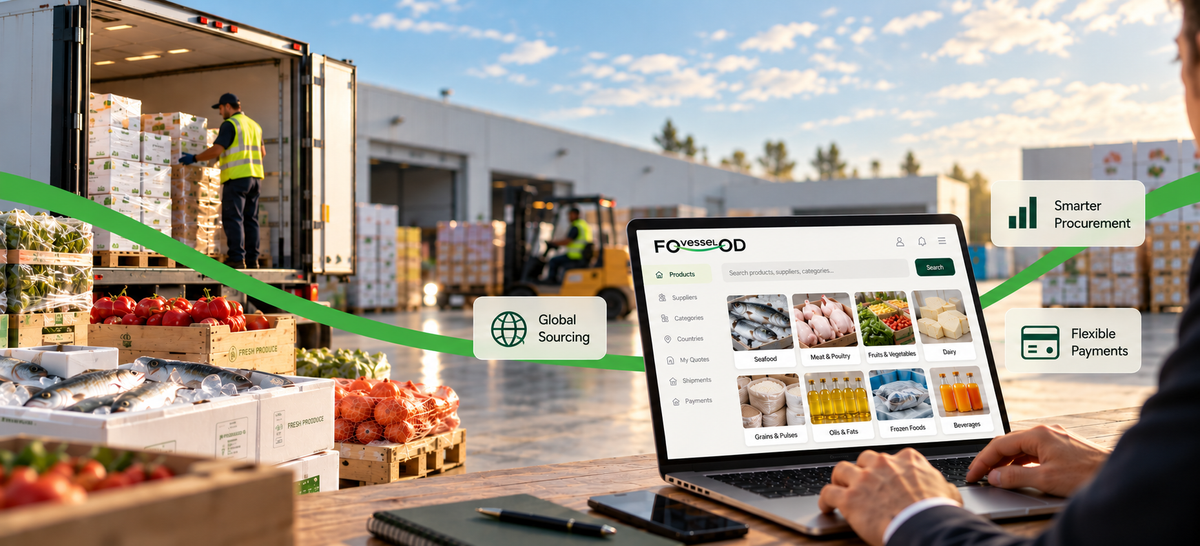
As the food industry evolves, the B2B food marketplace is witnessing a wave of innovation and transformation. From digital platforms to sustainability-driven practices, the trends in B2B marketplace dynamics are reshaping how suppliers, buyers, and distributors operate. Looking ahead to the second half of 2025, several key trends have emerged that are define the future of the global B2B food marketplace. Here are a few of them:
1. The Acceleration of Smart Marketplaces
In 2025, the shift toward digital platforms continues to accelerate. Traditional procurement models are being replaced with smart, integrated marketplaces offering real-time access to product availability, pricing, and logistics. At Food Vessel, we are streamlining sourcing by connecting businesses directly with trusted suppliers enhancing transparency and efficiency in every transaction.
2. AI-Driven Supply Chain Optimization
Artificial Intelligence is playing a key role in optimizing supply chains within the B2B food marketplace. From demand forecasting to intelligent routing, AI is enabling better planning and reducing operational costs. We are now exploring advanced data analytics to help buyers anticipate needs and plan more efficiently, driving smarter purchasing decisions.
3. Sustainability and Traceability
Sustainability is no longer a choice, it’s a business imperative. One of the most defining B2B marketplace trends is the surge in demand for ethical, transparent sourcing. Buyers are no longer just interested in price and quality, they want to know exactly where their food comes from and how it’s produced. Food Vessel has responded to this by integrating advanced traceability tools, offering clear visibility into product origin, handling practices, and environmental impact, including carbon footprint.
4. Rise of Local and Regional Sourcing
While globalization remains a driving force, businesses are increasingly turning to regional partnerships to build more resilient supply chains. This growing emphasis on localized sourcing helps reduce delivery times, lower emissions, and align with broader sustainability goals. The global B2B food marketplace is becoming more agile, and we are supporting this shift by spotlighting regional producers and niche suppliers that meet local market demands.
5. FinTech Integration and Flexible Payments
Financial technology is revolutionizing how transactions happen in the B2B space. From credit solutions to real-time payment systems, platforms are evolving to support businesses of all sizes. While this is an industry-wide shift, Food Vessel is innovating by offering flexible payment options, empowering buyers and sellers to operate with greater financial agility.
The B2B food marketplace is defined by speed, intelligence, and sustainability. AI-powered insights, localized sourcing, and data-driven decision-making are transforming how businesses operate and grow. Those who embrace these evolving B2B marketplace trends will lead the way. As the global B2B food marketplace continues to transform, Food Vessel continues to set pace, drive innovation, enable smarter trade, and shape the future of how food moves across borders.